Collect 'Em All: America's Weird Obsession With Skills Nobody Asked For
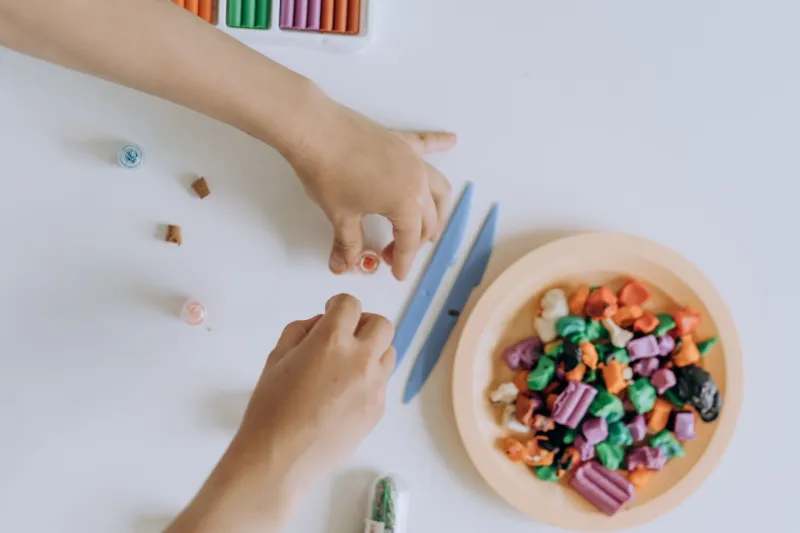
Somewhere in America right now, someone is watching their fourteenth YouTube tutorial on how to throw pottery. They've bought the clay, bookmarked seventeen glazing techniques, and mentally redesigned their entire apartment around a ceramics studio corner. In six weeks, the wheel will be in a closet and they'll be deep into a beginner's guide to beekeeping.
Sound familiar? Yeah. We thought so.
There's a quietly massive cultural moment happening across the country, and it doesn't have a clean name yet. Call it skill hoarding, hobby cycling, or just the very American compulsion to collect competencies — the phenomenon of obsessively learning niche skills, riding the high of early progress, and then moving on before anything close to mastery actually sets in. And it's more widespread than most of us want to admit.
The Starter Pack Is Always Full
Walk through any Target or browse any Amazon cart history and you'll see the evidence. Sourdough kits. Leather-working tools. Embroidery hoops. Beginner's Japanese workbooks. A ukulele that has never once been tuned. The American consumer doesn't just buy products — we buy potential versions of ourselves, and the market has gotten very, very good at selling us exactly that.
Data backs this up. The hobby and craft industry in the US crossed the $40 billion mark in recent years, and a significant chunk of that revenue comes not from dedicated enthusiasts but from people sampling and abandoning hobbies at a remarkable rate. Platforms like Skillshare and MasterClass have built entire business models around the idea that people will happily pay for access to skills they may never actually develop past the introductory module.
And honestly? That's not entirely a bad thing. But it does raise a question worth sitting with: What are we actually chasing?
The Psychology Behind the Pickup
Here's where it gets interesting. Psychologists have a term for the rush you feel when you first start learning something new — it's tied to dopamine release, the same neurochemical reward loop that makes social media scroll feel so satisfying. Early-stage learning is genuinely exciting because progress is fast and visible. You go from knowing nothing about sourdough to producing a halfway-decent loaf in two weekends. That trajectory feels incredible.
But then the plateau hits. The improvement slows. The skill starts demanding real, unglamorous repetition. And right around that point, a shiny new tutorial on Japanese wood joinery appears in your feed.
Dr. Mihaly Csikszentmihalyi's concept of "flow" — that state of total absorption in a challenging task — requires a very specific balance between skill level and challenge. Too easy and you're bored. Too hard and you're frustrated. The problem with modern self-improvement culture is that we've engineered a thousand ways to stay permanently in the exciting early phase without ever pushing through the harder middle stretch.
Social media didn't create this tendency. But it absolutely turbocharged it.
TikTok Made You Do It
There's a reason #LearnOnTikTok has billions of views. Short-form video is almost perfectly designed to deliver the feeling of learning without the friction of actual practice. Watch a satisfying sixty-second video of someone doing perfect knife cuts, and your brain registers something close to the pleasure of having done it yourself. It's vicarious competence, and it's oddly addictive.
Beyond that, social platforms have turned skill acquisition into a form of identity performance. Announcing that you're learning to code, post your sourdough starter progress, or share your embroidery journey isn't just about the skill itself — it's about signaling who you are and who you're becoming. The learning becomes the content, which means the pressure to keep producing new learning content is constant. Mastering something and quietly doing it for years doesn't generate nearly as much engagement as the perpetual beginner's journey.
This creates a weird loop: we pick up skills partly to have something interesting to share, and the sharing itself becomes more rewarding than the skill.
Identity Shopping in an Uncertain World
Zoom out a little and the behavior starts making more sense. Americans are navigating a genuinely destabilizing stretch of history — economic uncertainty, shifting job markets, a lingering cultural hangover from the pandemic years, and a creeping sense that traditional identity anchors (career, community, religion) are less reliable than they used to be.
In that context, skill acquisition isn't just a hobby. It's a low-stakes way of trying on different selves. Maybe I'm a person who makes things with their hands. Maybe I'm someone who speaks Mandarin. Maybe I'm a home baker. Each new skill represents a possible version of you that feels more grounded, more capable, more interesting than the one scrolling through anxiety at 11pm.
The self-improvement industry — worth well over $13 billion annually in the US — understands this perfectly. It doesn't sell skills. It sells the promise of transformation. And transformation is a product Americans have never been able to resist.
So Is Any of This Actually Bad?
Here's the thing — not really. Or at least, not entirely.
Yes, there's something worth examining in the endless cycle of starting and abandoning. Unfinished projects pile up. Supplies collect dust. There's a low-grade guilt that accumulates around all those things you were going to learn. And if the whole enterprise is fundamentally about avoiding discomfort rather than building anything real, that's worth noticing.
But there's also genuine value in being a perpetual beginner. People who regularly try new things tend to be more cognitively flexible, more empathetic (because they remember what it feels like to be bad at something), and more creative in how they approach problems. Picking up random skills, even briefly, expands the mental library in ways that are hard to quantify but probably real.
The sourdough starter you abandoned in 2020 might be gone, but you still understand fermentation better than you did before. The ukulele gathering dust in the closet means you can now read a chord chart. These fragments add up, even if they don't add up to mastery.
The Takeaway (Before You Click on That Woodworking Video)
Maybe the most honest thing we can say about skill hoarding is that it's a very human response to wanting more from life — and a very modern response to having infinite options for what "more" could look like.
The trick, if there is one, isn't necessarily to stop picking up new skills. It's to get a little more honest about why you're picking them up. Is this genuinely something you want to build? Or are you buying a new identity starter pack because the current one feels uncomfortable?
Either answer is fine, by the way. Just worth knowing the difference.
Now if you'll excuse us, we just found a really great intro course on fermentation chemistry. It's probably fine.