The Library Glow-Up Nobody Saw Coming — And Why Smart People Are Obsessed
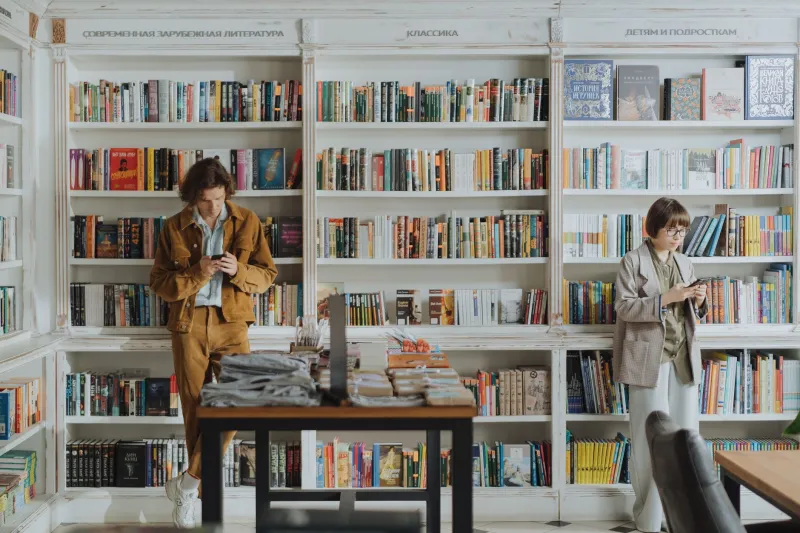
Somewhere between paying $17.99 a month for a streaming service you barely use and dropping $40 on a hardcover you'll read once, a quiet revolution started. It didn't trend on Twitter. It didn't get a Super Bowl ad. It happened in buildings with free parking and fluorescent lighting — and it's been building steam for years.
The library is back. And this time, it's not playing around.
It's Not Your Grandma's Book Depository Anymore
If your mental image of a public library is rows of encyclopedias and a stern woman with reading glasses shushing everyone, you're working with seriously outdated data. Modern American public libraries have undergone a transformation so thorough that calling them "book places" is almost insulting.
Take the Chicago Public Library system. Or the Brooklyn Public Library. Or the massive Multnomah County Library in Portland. These places now offer 3D printers, recording studios, sewing machines, laser cutters, and podcast equipment — all available to borrow or use on-site for exactly zero dollars. Some branches have seed libraries, where you can literally check out vegetable seeds for your garden. Others loan out fishing rods, telescopes, and museum passes.
The Los Angeles Public Library lets cardholders stream thousands of movies through Kanopy — a service that would cost real money otherwise. Libby, the app tied to most US library systems, gives you access to ebooks, audiobooks, and digital magazines without spending a dime. Hoopla, another library-connected platform, throws in comics and music.
The product got better. Dramatically better. And almost nobody outside the people already using it noticed.
Free as a Flex: The Psychology Nobody's Talking About
Here's where it gets interesting from a cultural standpoint. There's a well-documented psychological phenomenon around the word "free" — it doesn't just mean no cost, it carries an emotional charge that paid alternatives simply can't match. Behavioral economists like Dan Ariely have written extensively about how "free" bypasses our normal cost-benefit calculations entirely. We respond to it differently than we do to even very cheap things.
But something newer is happening with the library resurgence. "Free" is quietly becoming a status signal — not in the old, embarrassed way of clipping coupons and hoping nobody notices, but in a very deliberate, almost smug way. The same demographic that built the slow food movement and the buy-nothing groups and the capsule wardrobe trend is now flexing their library cards like they're black AmEx holders.
The logic tracks perfectly with where cultural values are drifting. Conspicuous consumption is losing its cool. Knowing how to extract maximum value from systems that already exist — that's the new intelligence signifier. Paying for something you could access for free isn't just wasteful anymore; in certain circles, it's starting to look a little naive.
Gen Z Didn't Rediscover the Library — They Claimed It
Millennials tend to think of the library as a nostalgia trip. Gen Z is treating it as infrastructure.
There's a practical dimension here that can't be ignored. Younger Americans are navigating an economy where the cost of basically everything — rent, groceries, education, entertainment — has outpaced wage growth for years. Subscription fatigue is real. The average US household is spending hundreds of dollars a year on digital subscriptions, many of which overlap in what they offer. At some point, the math stops making sense.
Library cards are free. The services attached to them are free. The building is heated in winter and air-conditioned in summer. There are outlets to charge your laptop. There is WiFi. There are humans available to help you find things — actual trained humans, which is increasingly rare in a world of chatbots and FAQ pages.
On TikTok and Reddit, there are entire communities dedicated to "library hacks" — threads cataloguing obscure services that most cardholders don't know exist. People are genuinely excited about this. Not ironically excited. Actually excited.
The Public Institution Comeback Story
There's a broader cultural narrative buried in all of this that's worth naming directly. Public institutions in America have spent decades getting beaten up in the discourse — underfunded, understaffed, and treated as relics by both politicians and the private sector alternatives competing against them.
Libraries absorbed all of that and kept adapting anyway. They added maker spaces when maker culture took off. They started hosting job fairs and ESL classes and mental health workshops. They became de facto community centers in cities where third spaces — the places that aren't home or work — have been disappearing steadily.
And now, as the subscription economy starts showing cracks and people get more deliberate about where their money goes, the library is sitting there looking extremely prepared for this exact moment.
The American Library Association reports that library card registrations have been climbing. Visits are up in many major metro systems post-pandemic. The narrative that libraries are dying has been quietly, stubbornly contradicted by actual usage data.
What You're Probably Missing From Your Own Library
Here's a practical gut-check: when did you last look at what your local library actually offers? Not what you assume it offers — what it actually has right now.
Beyond books (which, yes, are still there and still excellent), your library card might get you:
- Free streaming through Kanopy or Hoopla
- Digital magazines through apps like Libby or RBdigital
- Museum passes to local institutions (hugely common in metro areas)
- Tool libraries in some cities — yes, actual power tools
- Language learning apps like Mango Languages, fully licensed through the library
- Notary services, often free
- Meeting rooms for community groups or small businesses
- Access to databases like LinkedIn Learning, Ancestry.com, or academic journals
Some of this stuff, if you were paying out of pocket, would run you $30, $50, $100 a month. It's sitting there attached to a card that costs nothing to get.
The Real Power Move
There's something almost rebellious about enthusiastically using public resources in an era that's been relentlessly pushing you toward paid alternatives. Not rebellious in a dramatic way — just quietly, practically defiant.
The library doesn't need your credit card. It doesn't have a premium tier. It doesn't throttle your access if you don't upgrade. It's funded by taxes you already paid, built to serve you, and — here's the kicker — most people are barely using it.
So yeah. Get the card. Download the apps. Book the recording studio. Check out the telescope. The most underrated membership in America has been waiting in your neighborhood this whole time, and the people who figured that out first are absolutely not telling everyone about it.
Consider this your tip-off.


