Trapped by Design: How Your Favorite Apps Are Engineered to Steal Your Time
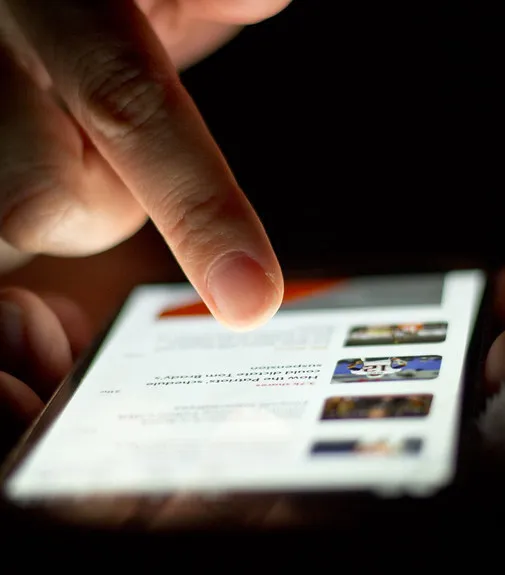
Photo: Japanexperterna.se, CC BY-SA 2.0, via Wikimedia Commons
You picked up your phone to check one notification. Forty-five minutes later, you're watching a video about competitive dog grooming in rural Finland and you have absolutely no idea how you got there. Sound familiar? You're not weak-willed. You're not easily distracted. You're just a human being who downloaded software that was specifically built to do exactly that to you.
Welcome to the attention economy — and you're the product being sold.
The Slot Machine in Your Pocket
Let's start with the big one: variable reward schedules. This concept comes straight out of mid-20th century behavioral psychology, pioneered by B.F. Skinner. His research showed that when rewards are unpredictable — sometimes you get one, sometimes you don't — subjects become far more compulsive in their behavior than when rewards are consistent.
Social media platforms figured this out fast. Every time you pull down to refresh your feed, you're essentially pulling a slot machine lever. Maybe you'll get a hilarious meme. Maybe you'll get a breaking news story that makes your stomach drop. Maybe you'll get nothing interesting at all. That unpredictability is the entire point. Your brain releases a small hit of dopamine in anticipation of a possible reward, not just when the reward actually shows up. The refresh itself becomes the habit loop.
TikTok, Instagram Reels, and YouTube Shorts have turbocharged this mechanic. The swipe-up gesture mimics that same slot-pull motion, and the algorithm is specifically tuned to serve you something genuinely interesting just often enough to keep you swiping through the boring stuff. It's not accidental. It's A/B tested, iterated, and optimized by teams of engineers whose literal job is to maximize the time you spend in-app.
Infinite Scroll: The Feature That Was Designed to Eat Your Evening
Before infinite scroll, websites had pages. You'd reach the bottom, click "Next," and that tiny moment of friction gave your brain a natural pause — a chance to ask, do I actually want to keep going? Infinite scroll eliminated that pause entirely.
Aza Raskin, the designer who invented infinite scroll back in 2006, has since become one of its most vocal critics. He's estimated that the feature costs humanity roughly 200,000 hours of collective attention every single day. He's called it one of his biggest regrets.
The absence of a natural stopping point matters more than most people realize. Our brains rely on environmental cues to signal when a behavior should end. Finishing a chapter, reaching the bottom of a page, completing a playlist — these are off-ramps. Infinite scroll paves over every off-ramp and just keeps the highway going. Without those cues, the default behavior is simply to keep scrolling.
Notifications: The Interruption That's Actually an Invitation
Push notifications are often framed as a convenience feature. In reality, they're one of the most powerful behavioral hooks ever designed for consumer software.
Here's the thing about a notification: it doesn't just inform you. It creates an open loop in your brain. Humans are deeply uncomfortable with unresolved information — psychologists call this the Zeigarnik effect, which describes how incomplete tasks occupy mental bandwidth far more than completed ones. A notification badge sitting on an app icon is an open loop. It nags at you. It creates low-grade anxiety until you tap it and close the loop.
Platforms also time notifications strategically. Research has shown that engagement spikes when users are reached during transitional moments — commuting, waiting in line, lying in bed before sleep. Many apps quietly track these patterns for individual users and schedule pings accordingly. That 10:47 PM buzz from Instagram? It knows you're probably still awake.
The Novelty Trap and Why Your Brain Can't Resist It
Humans are novelty-seeking creatures. From an evolutionary standpoint, that makes sense — new information could signal danger, opportunity, or resources. Your brain is hardwired to pay attention to anything new in your environment.
News apps exploit this ruthlessly. The 24-hour news cycle used to be a journalistic constraint. Now it's a product feature. Breaking news alerts, live update banners, and "developing story" labels all trigger that same ancient novelty-seeking instinct. It doesn't matter whether the story is genuinely important or just a minor update on something from three days ago. The word "breaking" is enough to spike attention.
Social media layers on top of this with social novelty — the particularly potent question of what are other people doing and saying right now? FOMO (Fear of Missing Out) isn't just a millennial buzzword. It's a documented psychological phenomenon that platforms deliberately cultivate through features like live streaming, ephemeral Stories that disappear in 24 hours, and real-time trending topics.
When Casual Browsing Becomes Something Else
So how do you know when your scrolling habit has crossed a line? Researchers point to a few key signals worth paying attention to:
You're using apps to avoid emotions. If reaching for your phone is your automatic response to boredom, anxiety, loneliness, or stress — rather than an intentional choice — that's a sign the behavior is functioning more like a coping mechanism than casual entertainment.
You feel worse after, not better. Studies consistently show that passive social media consumption (scrolling without posting or interacting) tends to increase feelings of anxiety and inadequacy, not reduce them. If you regularly finish a scrolling session feeling vaguely bad about yourself or the world, that's data worth taking seriously.
You lose track of time routinely. The occasional time warp is human. If it's happening daily, especially when it's eating into sleep, work, or real-world relationships, the design is winning.
Getting Some of Your Brain Back
None of this means you need to delete every app and move to a cabin. But a few practical moves can meaningfully shift the balance of power:
- Turn off non-essential notifications entirely. You can check apps on your schedule instead of theirs.
- Set app timers through your phone's built-in screen time tools. The friction of a "time's up" prompt is often enough to break the autopilot loop.
- Introduce your own stopping cues. Decide before you open an app what you're looking for and set a loose intention to close it once you've found it.
- Charge your phone outside your bedroom. This one sounds small. It is not small.
The apps aren't going to change their design philosophies voluntarily — there's too much money in keeping you hooked. But understanding the mechanics of the trap is the first step to stepping around it. You're not fighting your own laziness. You're pushing back against some of the most sophisticated behavioral engineering in human history.
Give yourself a little credit for even noticing.